Content
For procurement specialists, furniture manufacturers, and commercial interior designers, selecting the right upholstery material is a decision that impacts product longevity, customer satisfaction, and brand reputation. Polyester chenille upholstery has gained significant market share due to its unique combination of softness and resilience. This technical guide provides a deep dive into the material's performance characteristics, helping B2B buyers make data-driven sourcing decisions.
The durability of polyester chenille fabric for sofa durability is fundamentally determined by its yarn construction. Chenille is a specialized yarn created by placing short lengths of fiber (the "pile") between two core yarns and twisting them together. The pile height, twist density, and the security of the anchoring mechanism directly influence how the fabric withstands abrasion and snagging.
The Martindale test (ISO 12947) is the industry standard for measuring abrasion resistance. The cycle counts correlate directly with application suitability.
| Martindale Cycles | Application Grade | Typical Use Case |
|---|---|---|
| 10,000 - 15,000 | Light Domestic | Occasional chairs, headboards |
| 15,000 - 25,000 | General Domestic | Daily-use sofas in low-traffic homes |
| 25,000 - 40,000 | Heavy Domestic / Light Commercial | Family rooms, boutique hotels |
| >40,000 | Commercial / Contract | Offices, waiting rooms, public seating |
Polyester's inherent fiber strength minimizes pilling compared to natural fibers, as pills tend to break off rather than entangle. However, snagging remains a consideration for chenille. Fabrics with a tighter weave and lower pile height exhibit superior snag resistance. ASTM D3512 (Random Tumble Pilling Test) provides quantifiable data on a fabric's tendency to pill.
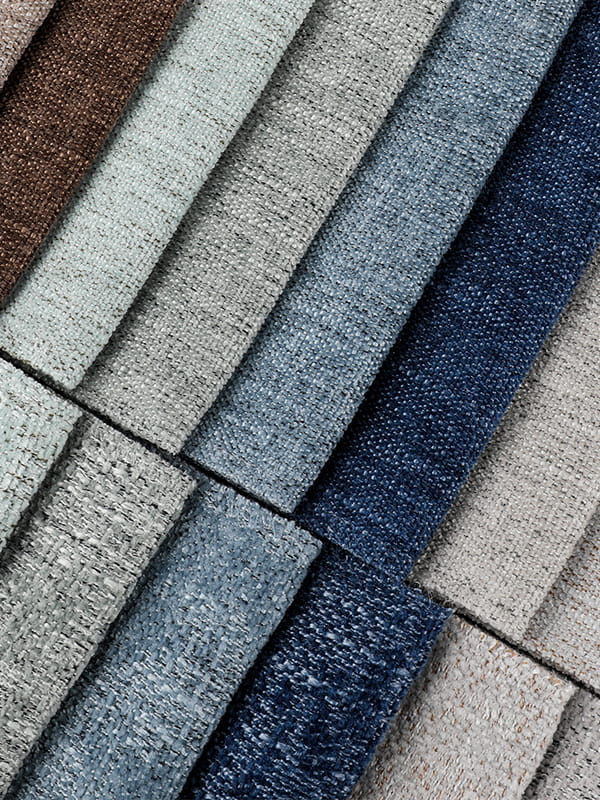
Consistency in durability requires precise control over raw materials and production parameters. Companies with over a decade of experience, such as Haining Weite Sino Technology Co., Ltd., have developed robust quality assurance protocols. Their expertise in weaving chenille alongside warp-knitted velvet and jacquard fabrics ensures that the yarn structure is optimized for specific performance targets, meeting the diverse needs of furniture factory clients who require reliable, repeatable results across production runs.
The term "washable" requires careful definition in a B2B context. For washable polyester chenille upholstery fabric, it can mean either the fabric itself can withstand machine washing (for removable covers) or it features a topcoat that allows for easy spot cleaning without wetting the entire substrate. Most upholstery-grade chenille is designed for professional cleaning or spot treatment, but specialized constructions with encapsulated yarns can offer machine-washability for removable covers.
Stain resistance is achieved through finishing technologies applied to the fabric surface. Traditional fluorocarbon-based finishes create a low-surface-energy barrier. Newer, eco-friendly options include nano-particle coatings (e.g., silica-based) that create a microscopic "lotus effect" or advanced dendrimer chemistries that provide oil and water repellency without PFOA/PFOS. These finishes are designed to withstand multiple cleaning cycles.
For fabrics marketed as washable, specific ISO standards govern performance.
When evaluating polyester chenille vs cotton chenille furniture, the choice hinges on the performance characteristics of the base fiber. Polyester is a synthetic polymer, while cotton is a natural cellulose fiber.
Polyester fibers have higher tensile strength and significantly better abrasion resistance than cotton. This translates to a longer useful life in high-contact areas.
Polyester is inherently more stain-resistant as it is less absorbent than cotton. Oils and water-based stains tend to sit on the surface, making them easier to blot away. Cotton's hydrophilic nature can lead to deeper staining.
Solution-dyed polyester offers exceptional UV resistance, making it suitable for sun-exposed areas. Cotton is prone to photodegradation and fading over time.
| Property | Polyester Chenille | Cotton Chenille |
|---|---|---|
| Abrasion Resistance (Martindale) | High (25,000 - 50,000+ cycles) | Moderate (10,000 - 20,000 cycles) |
| Stain Resistance | High (low absorbency) | Low to Moderate (absorbs liquids) |
| UV Resistance (Colorfastness) | Excellent (especially solution-dyed) | Fair (prone to fading) |
| Moisture Absorption | Low (0.4%) | High (7-8%) |
| Drying Time (after cleaning) | Fast | Slow |
| Pilling Tendency | Low (pills shed) | Moderate (pills entangle) |
Cotton chenille offers superior breathability and a natural, soft handfeel that some end-users prefer. Polyester chenille, while soft, may feel warmer in hot climates due to its lower moisture vapor transmission rate. However, modern microfiber polyester constructions can mitigate this difference.
Polyester chenille is generally more cost-effective than high-quality cotton chenille. When factoring in the extended lifespan, reduced cleaning costs, and lower fade-related replacements, polyester offers a superior total cost of ownership for commercial applications.
Standard indoor chenille is not suitable for exterior exposure. Outdoor polyester chenille fabric by the yard incorporates specific modifications to withstand the elements.
The supply chain for outdoor fabric varies. Some mills require large minimum order quantities (MOQs) of thousands of yards per color. However, specialized suppliers with robust stocking programs can offer "by the yard" purchasing for wholesale clients. This is achieved by maintaining a deep inventory of standard colors and constructions, allowing them to cut and ship smaller quantities while still meeting the needs of furniture manufacturers and retailers.
The modern market demands flexibility. Companies like Haining Weite Sino Technology Co., Ltd. have adapted by developing a diverse product portfolio—including chenille, jacquard, and tech fabrics—and maintaining a stocked inventory of over ten new product developments. This business model is designed to serve not only large-volume orders but also the "continuous turnover" needs of wholesale retailers and furniture factories that require consistent replenishment without committing to massive single-order quantities, a crucial factor for just-in-time manufacturing.
For heavy duty polyester chenille for commercial use, the performance bar is set higher than residential. Contract-grade upholstery must typically exceed 40,000 Martindale cycles. Some specifications, particularly for high-traffic public transport or healthcare, may require 100,000+ cycles and pass additional tests like the Wyzenbeek abrasion test (ASTM D4157).
Heavy-duty chenille often incorporates a reinforced backing system. This can include:
Commercial upholstery must meet stringent fire safety regulations.
In demanding settings, the fabric must also resist staining from common substances (coffee, wine, disinfectants) and withstand frequent cleaning. Heavy-duty chenille for these applications often features a protective topcoat that allows for the use of harsh hospital-grade disinfectants without degradation.
Polyester chenille upholstery offers a versatile platform for both residential comfort and commercial durability. By carefully evaluating Martindale ratings, washability specifications, fiber comparisons, and construction details, B2B buyers can confidently select materials that meet the exact demands of their end-use applications.
Standard widths for upholstery-grade chenille are typically 54" to 60" (137cm to 152cm). However, widths can vary by manufacturer and specific product line. Always confirm the usable width with the supplier before cutting.
Polyester chenille is technically recyclable, as it is a thermoplastic polymer. However, the infrastructure for post-consumer upholstery fabric recycling is still developing. Some manufacturers are exploring chemical recycling to break down polyester to its monomers for repolymerization. For now, most post-consumer material is downcycled or incinerated for energy recovery.
Polyester chenille generally performs well against pilling due to the high strength of polyester fibers. When pills do form, they are more likely to break off from the surface (as per ASTM D3512) rather than forming tenacious, unsightly balls, which is common with softer natural fibers.
Even with solution-dyed fibers and UV stabilizers, all outdoor fabrics will eventually show some degree of fading over many years. The primary limitation is not color loss but potential breakdown of any secondary coatings or backing materials if they are not also UV-stabilized. It is also critical to ensure the frame and cushions allow for air circulation to prevent mildew on the underside.
For commercial specifications, request the following test reports: ASTM D4157 (Wyzenbeek abrasion) or ISO 12947 (Martindale abrasion), ASTM D4034 (Seam Slippage), ASTM D3512 (Pilling), CAL TB 117 or BS 5852 (Flammability), and AATCC 16.3 or ISO 105-B02 (Colorfastness to Light).



 English
 عربى
عربى Español