Content
Surrey sofa tech fabric represents a category of high-performance upholstery textile engineered specifically for modern sofa and seating applications where conventional woven or knitted fabrics fall short of durability, cleanability, and aesthetic longevity requirements. The term "tech fabric" in the context of upholstery denotes a textile substrate that integrates advanced fiber technology, precision construction engineering, and functional surface treatments to deliver measurable performance advantages over traditional upholstery materials such as standard polyester weaves, cotton blends, or entry-level chenille. In the Surrey category specifically, this means fabrics engineered with tightly controlled pile density, enhanced abrasion resistance, stain-barrier chemistry, and dimensional stability — properties that directly determine the service life and appearance retention of upholstered furniture in residential, hospitality, and contract environments. This guide provides a comprehensive technical reference for furniture manufacturers, wholesale fabric buyers, interior designers, and retail procurement specialists seeking authoritative information on Surrey sofa tech fabric construction, performance benchmarks, application suitability, and sourcing criteria.
Surrey sofa tech fabric is predominantly constructed from high-tenacity polyester filament, either as a warp-knitted base structure with a cut or uncut pile surface, or as a flat woven construction with a technical coating or laminate system applied to the reverse face. Polyester is the fiber of choice for technical sofa upholstery because of its combination of mechanical strength, color fastness, moisture resistance, and compatibility with the functional finishes that define tech fabric performance. The fiber specifications typically used in tech fabric for sofa upholstery production include:
The majority of Surrey sofa tech fabrics are produced on high-gauge warp-knitting machines (Karl Mayer RD or equivalent, 28–36 gauge), which produce a dimensionally stable base structure with consistent pile loop geometry across the full fabric width. The warp-knit architecture offers several structural advantages over woven pile constructions for technical sofa applications:
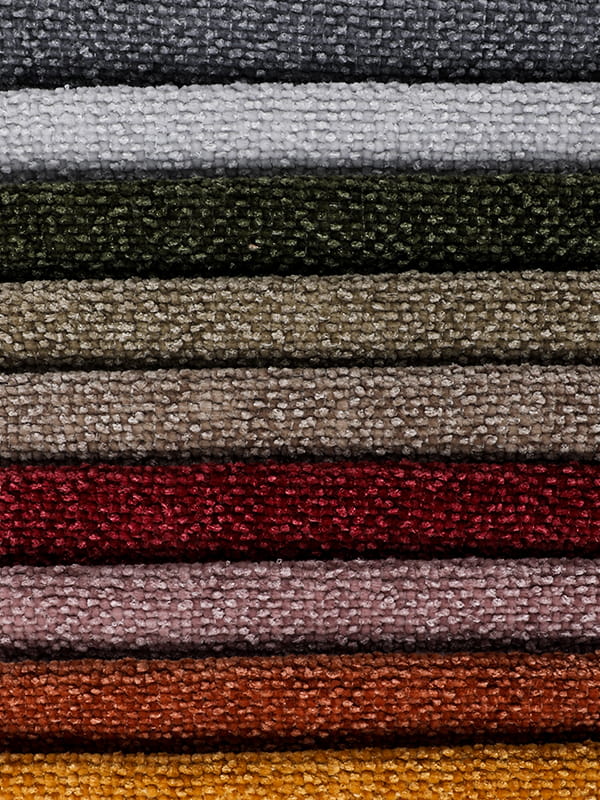
The surface character of Surrey sofa tech fabric is defined by its pile or surface finishing treatment, which determines visual texture, hand feel, and the directional light-reflection behavior ("nap direction") central to the fabric's aesthetic identity. Principal surface types include:
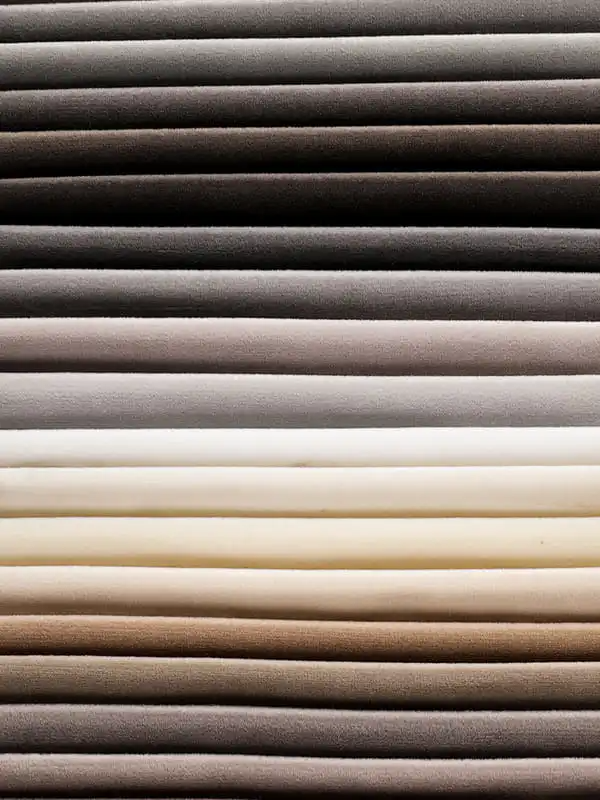
The designation high performance sofa tech fabric is not a marketing term but a specification category with measurable performance parameters verified by standardized testing. The following section details the critical technical properties that differentiate genuine tech fabric from standard upholstery fabric and provides the test methods and minimum values that procurement specialists should include in fabric purchase specifications.
Abrasion resistance is the single most important durability parameter for sofa upholstery fabric and the primary performance dimension that distinguishes Surrey sofa tech fabric from conventional alternatives. The Martindale abrasion test (ISO 12947-2) is the universal standard for upholstery fabrics. A circular specimen mounted under a defined pressure (12 kPa for upholstery) is abraded against a standard wool abrading cloth in a figure-of-eight motion; the test is terminated when two yarn breaks occur or visible fabric degradation is observed, and the result is reported in cycles:
The pile anchoring strength — the force required to extract a single pile tuft from the base structure — is a secondary abrasion-related parameter. Well-engineered Surrey tech fabric achieves pile extraction resistance of 15–25 N per tuft (ISO 10470 pill test correlated), preventing pilling and pile loss in high-cycle use.
Pilling — the formation of fiber tangles on the fabric surface — is one of the most visible forms of upholstery degradation and a primary consumer complaint driver. Surrey sofa tech fabric addresses pilling through three engineering approaches:
Pilling resistance is rated on a 1–5 scale per ISO 12945-2 (Martindale method for pilling) or ISO 12945-1 (pilling box method); Grade 4 minimum is required for residential upholstery; Grade 4–5 for contract applications.
Stain resistance is the functional property most directly valued by end consumers in sofa fabric selection. High performance sofa tech fabric achieves stain resistance through a combination of fiber geometry and applied chemistry:
Upholstery fabric is exposed to daylight, body perspiration, and cleaning agents throughout its service life. Minimum color fastness specifications for Surrey sofa tech fabric per ISO 105 test series:
The following table provides a systematic comparison of Surrey sofa tech fabric against the principal alternative upholstery fabric categories across the key performance dimensions relevant to furniture manufacturers and specifiers.
| Performance Parameter | Surrey Sofa Tech Fabric | Standard Polyester Velvet | Chenille | Polyester Linen Blend | Woven Jacquard |
|---|---|---|---|---|---|
| Martindale Abrasion (cycles) | 30,000–100,000+ | 15,000–25,000 | 20,000–40,000 | 25,000–50,000 | 20,000–40,000 |
| Pilling Resistance (ISO 12945) | Grade 4–5 | Grade 3–4 | Grade 2–3 | Grade 3–4 | Grade 3–4 |
| Stain Resistance | Excellent (DWR / nano finish) | Moderate | Low–Moderate | Moderate | Moderate |
| Light Fastness (ISO 105-B02) | Grade 5–6 | Grade 4–5 | Grade 4 | Grade 4–5 | Grade 4–5 |
| Cleanability | High (W / S / WS codes) | Moderate (W code) | Low–Moderate | Moderate (W code) | Moderate |
| Dimensional Stability | Excellent (warp-knit base) | Good | Moderate (prone to stretch) | Good | Excellent |
| Hand Feel | Soft–Luxurious (microfiber) | Soft | Very soft but coarse | Natural, slightly rough | Structured, firm |
| Weight Range (g/m²) | 280–750 | 200–400 | 350–600 | 250–450 | 300–600 |
| Price Point | Moderate–High | Low–Moderate | Moderate | Low–Moderate | Moderate–High |
The long-term performance of Surrey sofa tech fabric durability under in-service conditions depends as much on the structural integrity of the pile-to-base bond as it does on the inherent fiber strength. Pile loss — individual tufts or filaments detaching from the base structure — is the most common mode of appearance failure in upholstery pile fabrics and is distinct from abrasion or pilling. In warp-knit constructions, pile anchoring strength is determined by:
In the upholstery process, fabric seams are subjected to complex biaxial tension as the fabric is pulled tight over foam and frame structures. Seam strength requirements for sofa upholstery fabric per EN 14465 (European furniture fabric standard) specify:
Surrey sofa tech fabric with a warp-knit base and polyurethane back-coat typically achieves seam breaking strength of 600–900 N and seam slippage below 3 mm — well above the minimum EN 14465 thresholds and consistent with the tight upholstery construction used by high-productivity furniture manufacturers.
Depending on the end market and application, Surrey sofa tech fabric must comply with national or regional flame retardancy standards. The principal regulatory frameworks applicable to sofa upholstery fabric include:
Flame retardancy in tech fabric for sofa upholstery is achieved either through inherent FR fiber (phosphorus-modified PET) or through back-coat FR treatment with halogen-free phosphorus/nitrogen chemistry, avoiding the brominated compounds restricted under EU REACH Regulation (EC) No 1907/2006.
Surrey sofa tech fabric in the warp-knitted velvet category represents the convergence of classic velvet aesthetics with modern performance engineering. The velvet surface — characterized by its dense, erect pile and characteristic directional sheen — is produced on high-gauge tricot or raschel warp-knitting machines followed by precision pile cutting and finishing on a velvet finishing range. The technical upgrade that elevates warp-knit velvet from a decorative fabric to a true high performance sofa tech fabric includes:
Embossed Surrey sofa tech fabric adds pattern dimensionality through controlled thermal deformation of the pile surface using engraved metal rolls heated to 180–220°C. The embossing process permanently sets geometric or organic patterns into the pile by selectively crushing pile elements to different heights, creating a two-tone visual effect exploiting the directional reflectivity of the pile. Pattern repeat precision and embossing temperature stability are critical quality parameters, as temperature variation across the embossing roll width causes pattern depth inconsistency visible as shading variation in the finished fabric.
Jacquard-woven and jacquard-knitted variants of Surrey sofa tech fabric offer the highest design complexity achievable in upholstery textiles, with electronic Jacquard control enabling individual thread-level pattern programming for unlimited repeat design and multi-color capability. Technical advantages of jacquard construction for sofa applications over printed or embossed pattern techniques include:
The primary and highest-volume application for Surrey sofa tech fabric is residential sofa and seating manufacturing. In the residential segment, fabric selection is driven by the competing demands of soft hand (consumer preference), durability (warranty requirements), color range (retail merchandising), and unit cost. Modern residential furniture brands increasingly specify 30,000–50,000 Martindale cycle tech fabric as standard, replacing the 15,000–20,000 cycle standard polyester velvet that was the industry baseline a decade ago — driven by both increasing consumer awareness of fabric durability specifications and brand differentiation in competitive retail markets.
Hotels, restaurants, corporate offices, airports, and healthcare facilities represent the most technically demanding application environment for upholstery fabric. In these settings, seating may be subjected to continuous use across 16–20 hours per day, regular cleaning with commercial-grade cleaning agents, and exposure to UV from large glazed facades. High performance sofa tech fabric for contract and hospitality applications must meet all of the following thresholds simultaneously:
Outdoor furniture and covered terrace seating applications require a specialized variant of Surrey sofa tech fabric with solution-dyed yarn (SDY) construction and hydrophobic back-coating. Solution-dyed polyester achieves ISO 105-B02 light fastness of Grade 7–8 — significantly above the Grade 5–6 achievable with conventionally dyed polyester — by incorporating pigment into the polymer melt before extrusion, making the color integral to the fiber rather than a surface dye deposit. Combined with a water-repellent back-coat and UV-stabilized fiber chemistry, outdoor-grade Surrey tech fabric delivers a service life of 5–7 years in direct UV exposure environments.
| Application | Martindale Min. | Light Fastness Min. | FR Requirement | Recommended Surface | Weight Range (g/m²) |
|---|---|---|---|---|---|
| Light residential (occasional use) | 20,000 | Grade 4 | Optional | Cut pile velvet / embossed | 280–380 |
| Standard residential | 30,000 | Grade 5 | TB117-2013 (US) | Microfiber velvet / suede | 350–480 |
| Heavy residential / rental | 50,000 | Grade 5 | BS 5852 Crib 5 (UK) | High-density tech velvet | 450–600 |
| Light contract (offices, boutiques) | 50,000 | Grade 5–6 | EN 1021-1/2 | Jacquard / woven tech | 450–600 |
| Heavy contract (hotels, airports) | 100,000+ | Grade 6 | BS 5852 Crib 5 + EN 1021 | SDY high-performance tech | 550–750 |
| Outdoor / terrace | 30,000 | Grade 7–8 (SDY) | Not required (typically) | Solution-dyed flat weave / tech | 300–500 |
B2B buyers procuring Surrey sofa tech fabric should include the following parameters in their fabric purchase specifications to ensure consistent delivery quality and compliance with end-product requirements:
Haining Weite Sino Technology Co., Ltd. is a professional trade and manufacturing enterprise specializing in sofa fabrics and decorative textiles, integrating design, research and development, production, and sales within a single operational structure. Located in Haining, Zhejiang Province — one of China's most advanced textile and warp-knitting manufacturing clusters — the company has built a strong reputation in both domestic and international markets over more than a decade of continuous development. Haining Weite's core expertise in tech fabric for sofa upholstery positions it as a technically capable supplier for furniture manufacturers, wholesalers, and retail buyers seeking both product quality and supply flexibility.
Haining Weite's product range covers the full spectrum of sofa and decorative fabric categories demanded by modern furniture markets:
The company has independently developed more than ten new products in direct response to market demand for reduced minimum order quantities, enabling smaller furniture manufacturers, boutique upholstery workshops, and retail fabric buyers to access high-quality Surrey sofa tech fabric without the volume commitments typically required by large-scale manufacturers. This positions Haining Weite as a particularly valuable supply partner for wholesale retailers, smaller furniture factories, and product developers who require responsive, flexible sourcing with professional technical support.
Haining Weite's industrial supply chain extends across domestic China as well as international markets, with established customer relationships in Europe, the Americas, Southeast Asia, and the broader Asia-Pacific region. The company's ability to serve both single-order and wholesale repeat customers — providing a service model that supports both trial orders for product development and ongoing volume replenishment for production furniture factories — reflects a customer-centric commercial approach aligned with the operational realities of global furniture supply chains. Buyers seeking reliable, technically competent partners for high performance sofa tech fabric procurement are invited to contact Haining Weite directly to discuss specifications, sampling, and commercial terms.
Surrey sofa tech fabric is differentiated from regular sofa fabric by a combination of advanced fiber technology, precision construction engineering, and functional surface treatments that deliver measurably higher performance in abrasion resistance (typically 30,000–100,000+ Martindale cycles versus 15,000–20,000 for standard polyester velvet), stain resistance (through DWR or nano-finish chemistry), pilling resistance (Grade 4–5 versus Grade 3 for standard fabrics), and dimensional stability (warp-knit base with polyurethane back-coat). These properties extend the visible service life of upholstered furniture and support longer product warranties — both commercially important differentiators for furniture manufacturers in competitive retail environments.
For a high-traffic family home environment — including homes with children and pets — a minimum of 30,000 Martindale cycles (ISO 12947-2) is recommended as the baseline specification, with 50,000 cycles preferred for maximum service life and appearance retention. High performance sofa tech fabric rated at 50,000 cycles will typically maintain acceptable surface appearance for 7–12 years under normal family use, compared to 3–5 years for a 15,000-cycle standard fabric. The Martindale specification should always be confirmed with the full test report including the test termination criterion (two-thread break or visible degradation) and the abrading material used (standard wool felt per ISO 12947-1 for upholstery).
Yes — tech fabric for sofa upholstery is generally more suitable for pet-owning households than conventional sofa fabrics for several reasons. The high pile density and continuous filament (non-staple) construction of microfiber tech velvet reduces pet hair adhesion and facilitates easy removal by wiping or vacuuming.



 English
 عربى
عربى Español