Home /
News /
Industry News /
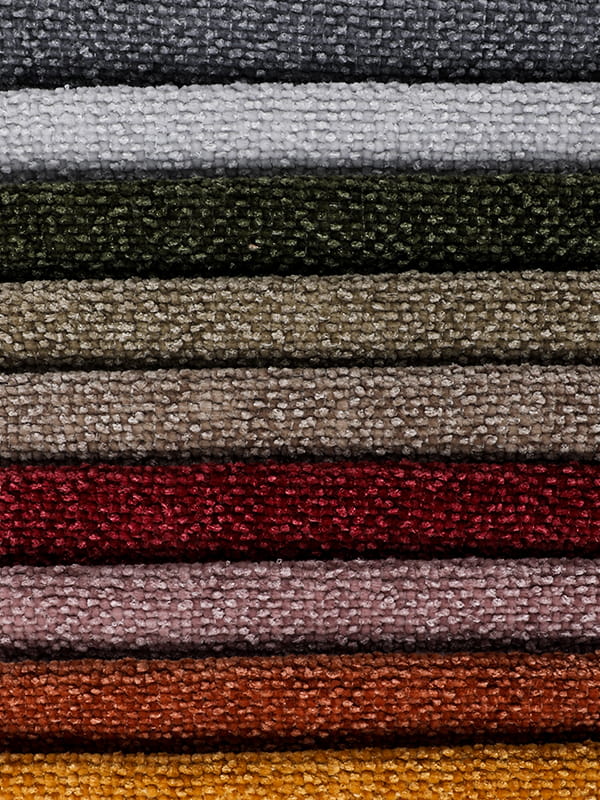
Technical Performance Evaluation: Durability of Polyester Chenille in High-Traffic Environments
Technical Performance Evaluation: Durability of Polyester Chenille in High-Traffic Environments
2026-05-10
Mechanical Durability and Abrasion Resistance Analysis
- The durability of polyester chenille upholstery is primarily quantified by the Martindale Rub Test. For high-traffic residential or commercial living rooms, the fabric must exceed 30,000 double rubs. Industrial-grade polyester variants often reach 50,000 to 100,000 cycles, ensuring structural integrity under constant friction.
- Unlike natural fibers, the synthetic filaments in heavy-duty chenille fabric provide high tensile strength, preventing the "shedding" or "balding" typically associated with low-quality rayon-based chenille.
- When evaluating chenille vs velvet durability, polyester chenille offers superior resistance to "shading" or permanent pile crushing. While velvet may show permanent pressure marks, the tufted structure of chenille recovers its loft more efficiently due to the core-spun yarn engineering.
Textile Architecture and Pilling Resistance Standards
- The pilling resistance of polyester chenille upholstery is rated on a scale of 1 to 5 according to ISO 12945-2. High-performance polyester yarns used in this construction typically achieve a Grade 4-5, meaning the long-chain polymer fibers are less likely to tangle and form surface balls.
- Is chenille fabric good for sofas with dogs? This depends on the weave density. A tight, high-GSM (Grams per Square Meter) weave reduces the risk of "snagging" from pet claws. However, the looped nature of the chenille pile remains a variable compared to flat weaves.
- To maximize the longevity of chenille sofa fabric, manufacturers often apply a secondary backing (typically a TC or fleece backing) to provide dimensional stability, preventing the fabric from stretching or sagging over high-density foam cushions.
Chemical Resistance and Colorfastness Parameters
- Colorfastness to light is a critical metric for living room furniture exposed to UV rays. Professional-grade polyester chenille upholstery adheres to AATCC 16.3 standards, maintaining color integrity for over 40 hours of xenon arc lamp exposure.
- In terms of maintenance, cleaning polyester chenille upholstery is more efficient than cleaning natural blends. Synthetic polyester is hydrophobic, meaning water-based stains remain on the surface longer before penetrating the core yarn, allowing for easier extraction.
- The best polyester upholstery for high-traffic areas often incorporates a solution-dyed process, where the pigment is added during the polymer melt stage, ensuring the color is consistent throughout the entire fiber cross-section.
Comparison of Industrial Upholstery Fibers
- Comparing synthetic options is essential for determining the appropriate specification for high-use furniture. Polyester vs microfiber for high-traffic rooms shows that while microfiber offers extreme liquid resistance, polyester chenille provides a superior tactile "hand-feel" and aesthetic depth without the "tracking" marks common in microfiber.
- The pros and cons of chenille upholstery are balanced by its thermal insulation and acoustic dampening properties, though it requires more frequent vacuuming to remove dust trapped between the tufted piles compared to flat-woven polyester.
- Technical Comparison Table:
| Performance Metric |
Polyester Chenille |
Cotton Chenille |
Standard Velvet |
| Abrasion (Double Rubs) |
30,000 - 100,000 |
10,000 - 15,000 |
20,000 - 50,000 |
| Moisture Absorption |
Low (<0.5%) |
High (8-25%) |
Moderate |
| UV Resistance |
Excellent |
Poor |
Moderate |
| Pilling Grade (ISO) |
4-5 |
2-3 |
4 |
Maintenance Protocols and Structural Preservation
- The process of how to clean polyester chenille upholstery involves using "S" (Solvent) or "WS" (Water/Solvent) coded cleaning agents. High-pressure steam cleaning should be avoided as excessive heat can distort synthetic fibers (polyester melting point is approximately 250°C, but shrinkage begins at much lower temperatures).
- Regular pile brushing is recommended to prevent localized matting in "high-impact" seating zones. This maintains the multidimensional light-reflecting properties of the yarn.
Engineering FAQ
- What is the GSM requirement for high-traffic chenille?
A minimum of 400-550 GSM is recommended for residential high-use furniture to ensure adequate yarn density.
- Does polyester chenille trigger static electricity?
Pure polyester can be prone to static; however, many industrial versions include anti-static treatments or carbon-filament blends to dissipate charges.
- Can this fabric pass NFPA 260 flammability tests?
Yes, most 100% polyester upholstery is inherently flame-retardant or can be treated to meet Class I flammability standards.
- How does "denier" affect the quality?
A higher denier per filament (DPF) in the core yarn increases the burst strength of the chenille tuft.
- Is the fabric prone to water spotting?
Unlike silk or rayon blends, 100% polyester is highly resistant to permanent water rings if blotted correctly.
Technical References
- ASTM D4157-13: Standard Test Method for Abrasion Resistance of Textile Fabrics (Oscillatory Cylinder Method).
- ISO 105-B02: Textiles - Tests for Color Fastness to Artificial Light.
- AATCC 8: Colorfastness to Crocking - Rotary Vertical Crockmeter Method.



 English
 عربى
عربى Español