Content
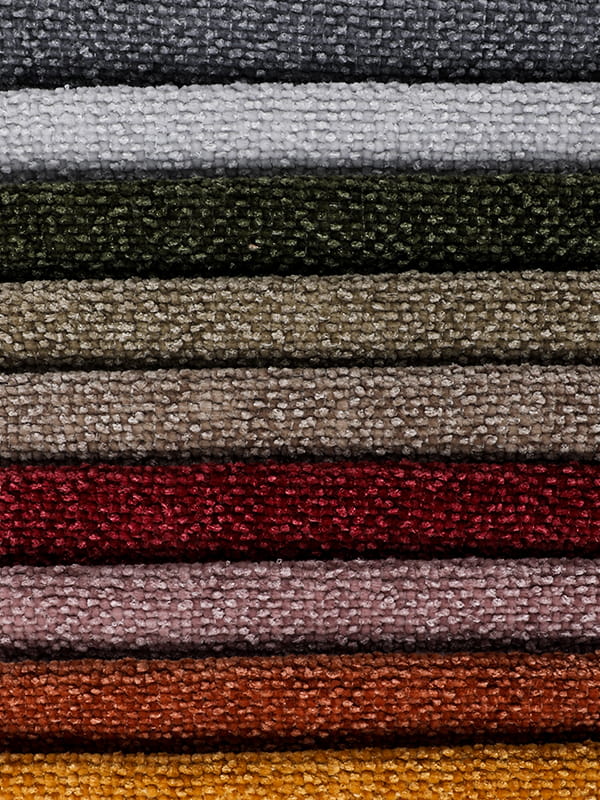
Professional furniture designers prioritize materials that balance tactile comfort with rigorous performance standards. For decades, polyester sofa chenille fabrics have dominated the upholstery market due to their unique structural integrity and aesthetic versatility. Unlike standard flat weaves, these textiles offer a three-dimensional depth that mimics luxury natural fibers while providing the resilience of engineered synthetics. Engineers and B2B procurement managers select these fabrics because they meet specific mechanical benchmarks required for high-traffic environments, ranging from residential living spaces to commercial office lounges.
The term chenille originates from the French word for "caterpillar," which describes the fuzzy texture of the yarn. The manufacturing process involves placing short lengths of yarn, known as the "pile," between two core threads. The machine then twists these core threads together, which traps the pile and creates a tufted strand. This yarn is subsequently woven into the final textile.
The pile yarns stand perpendicular to the core, creating the signature soft hand-feel. This structure allows the fabric to catch light at different angles, resulting in an iridescent or multi-dimensional appearance. Because the pile is securely held by the twisted core, the fabric maintains its texture even under significant physical pressure.
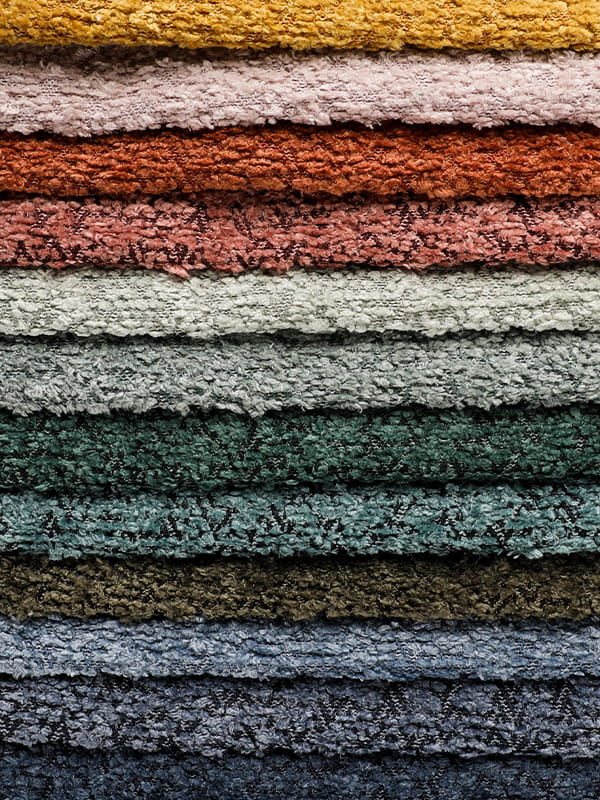
Modern polyester chenille upholstery fabric utilizes 100% polyester filaments for both the core and the pile. Polyester offers exceptional dimensional stability compared to cotton or rayon. It resists stretching, shrinking, and wrinkling. This synthetic foundation ensures that the fabric stays taut on furniture frames over long periods of use, preventing the sagging often seen in natural fiber alternatives.
When sourcing textiles for large-scale projects, engineers focus on standardized testing data to ensure longevity. The primary metric for upholstery is the Martindale rub test, which simulates the wear and tear of daily sitting.
High-performance polyester chenille typically exceeds 50,000 double rubs in laboratory testing. Some industrial-grade variants even reach 100,000 rubs. This data proves that the fabric is suitable for heavy domestic and commercial use. The density of the pile also prevents matting or crushing, ensuring the furniture retains its original silhouette. Therefore, polyester chenille sofa durability is a decisive factor for procurement officers managing high-traffic hospitality or corporate facilities.
Polyester fibers provide high tensile strength, which prevents the fabric from tearing at the seams. During the weaving process, manufacturers often apply a backing layer to further enhance stability. This prevents the "shifting" of yarns, which is a common failure point in lower-quality textured fabrics.
Procurement professionals often conduct a polyester chenille vs microfiber analysis to determine the best fit for specific environments. While microfiber offers a smooth, suede-like finish, chenille provides a more opulent and "crafted" texture. Chenille generally offers better breathability because its pile structure creates small air pockets that facilitate circulation.
The following comparison illustrates the technical differences between these two dominant synthetic textiles.
| Feature | Polyester Chenille | Microfiber (Suede-type) |
| Texture | Plush, dimensional pile | Smooth, uniform finish |
| Breathability | High (due to air pockets) | Lower (tightly woven) |
| Abrasion Resistance | Excellent (Martindale >50k) | Excellent (Very rugged) |
| Aesthetic Appeal | Traditional, Cozy, Opulent | Modern, Minimalist, Sleek |
Fabric weight is a critical indicator of suitability. Manufacturers measure weight in grams per square meter (gsm). For high-traffic sofas, a weight exceeding 400 gsm is standard. When buyers source polyester chenille fabric for chairs, they might opt for medium weights between 300 and 400 gsm to allow for easier upholstery on curved surfaces.
The application of the fabric varies based on the intended furniture type and the intensity of its environment.
| Fabric Grade | Weight (GSM) | Recommended Use |
| Lightweight | 200–300 gsm | Cushions, Throws, Decorative Accents |
| Medium-weight | 300–400 gsm | Dining chairs, Accent chairs, Headboards |
| Heavy-weight | >400 gsm | Living room sofas, Sectionals, Commercial Lounges |
Maintaining the appearance of large furniture installations is a significant operational cost. Facility managers must implement efficient protocols to clean polyester chenille upholstery without damaging the fiber structure. Because polyester is naturally hydrophobic, it does not absorb liquid spills as quickly as natural fibers.
For daily maintenance, regular vacuuming with an upholstery attachment removes dust from the pile. For spot treatment, technicians should blot spills immediately using a clean, absorbent cloth. A mild solution of lukewarm water and non-ionic detergent is usually effective for 100% polyester compositions. It is critical to avoid saturating the fabric, as excess water can cause the pile to flatten or "clump" during the drying process.
Industrial cleaners must follow the "W" (water-based) or "S" (solvent-based) cleaning codes. Most polyester chenille fabrics carry a "W" or "W/S" code. Technicians must avoid harsh chemicals like acetone, ketones, or strong acids, as these can chemically degrade the synthetic fibers or dissolve the backing material. Solvent-based cleaners should be tested on an inconspicuous area to ensure no discoloration occurs.
The European Ecodesign for Sustainable Products Regulation (ESPR) is shifting the industry toward more durable and recyclable materials. Future polyester sofa chenille fabrics will likely feature higher percentages of recycled content, such as polyester derived from post-consumer plastic. This transition supports global circular economy goals while maintaining the physical performance required for industrial applications. Digital Product Passports (DPP) will soon provide B2B buyers with full transparency regarding the material's origin and environmental footprint.
In conclusion, polyester sofa chenille fabrics represent an engineered solution for the demanding needs of the furniture industry. By combining the luxurious texture of a pile fabric with the mechanical strength of polyester, these textiles provide unmatched value for B2B procurement. Whether evaluating polyester chenille sofa durability for a new product line or training staff to clean polyester chenille upholstery, understanding the underlying textile engineering is essential. The versatility of polyester chenille fabric for chairs and sofas ensures that it will remain a staple material in both residential and commercial sectors.



 English
 عربى
عربى Español